
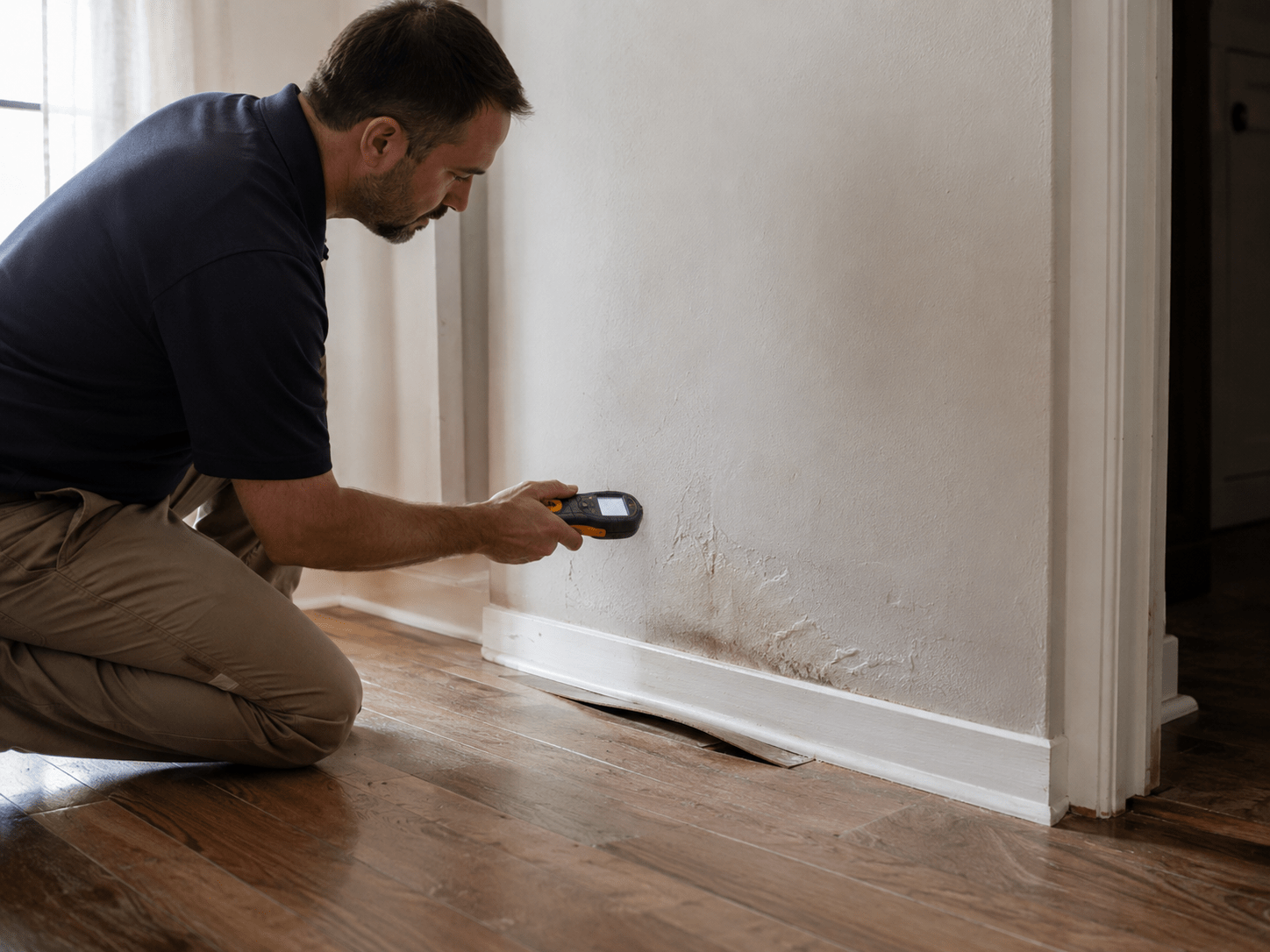
Discovering water on a hardwood floor can be alarming. Wood is sensitive to moisture, and prolonged exposure can cause boards to swell, cup, warp, stain, or separate. However, water-damaged hardwood does not automatically need to be replaced. In many situations, flooring may be salvageable when the water source is stopped quickly and professional drying begins before damage becomes severe.
For property owners in Spring, TX, the outcome depends on several factors, including the type of wood floor, the amount and type of water, how long the floor has been wet, the condition of the finish, and whether moisture reached the subfloor.
Why Water Changes Hardwood Flooring
Wood naturally gains and loses moisture as its environment changes. The National Wood Flooring Association explains that wood can swell when it gains moisture and that excessive moisture can cause cupping, where the edges of a floorboard become higher than its center. Standing water can also contribute to warping, cracks, finish damage, and discoloration.
The challenge is that the surface may begin to feel dry while moisture remains between boards or underneath the flooring. That is why appearance alone does not determine whether a floor has dried adequately.
What Determines Whether the Floor Can Be Saved?
The faster the water is removed, the better the opportunity may be to limit additional damage. A small, quickly addressed clean-water leak is very different from flooring that has remained saturated for an extended period or has been exposed to contaminated water.
The flooring construction matters as well. Solid hardwood, engineered wood, the adhesive system, underlayment, and subfloor can all respond differently to moisture. Restoration professionals must consider the entire flooring assembly rather than only the visible boards.
How Professional Structural Drying Works
Water damage restoration in Spring, TX may start with extracting accessible water. Technicians can then use commercial air movers and dehumidifiers to create drying conditions, while moisture meters help track what is happening in the wood and surrounding materials.
EPA guidance recognizes moisture meters as useful for measuring moisture content after water damage and monitoring drying progress.
This is especially important with hardwood because restoring the surrounding room while leaving a wet subfloor or flooring system can lead to continuing problems.
Should Cupped Hardwood Be Replaced Immediately?
Not necessarily. Cupping indicates a moisture imbalance, but decisions about repair, sanding, refinishing, or replacement are best made after the moisture source has been corrected and the flooring has been evaluated.
Attempting cosmetic repairs while the wood is still excessively wet can address the appearance without solving the underlying moisture problem.
Some boards may return closer to their original dimensions as drying progresses, while severely damaged flooring may require repair or replacement. The appropriate response depends on the specific floor and extent of the loss.
Water Damage Restoration for Hardwood Floors in Spring, TX
Houston Restore Pros provides water extraction, drying, mitigation, and water damage restoration services for homeowners and businesses in Spring, TX.
If your hardwood floor has been affected by a leak, overflow, or other water emergency, do not wait for boards to buckle or warp further. Contact Houston Restore Pros for professional water damage restoration in Spring, TX, and have the flooring and materials underneath it properly evaluated and dried.